






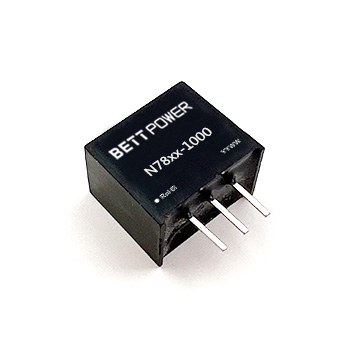
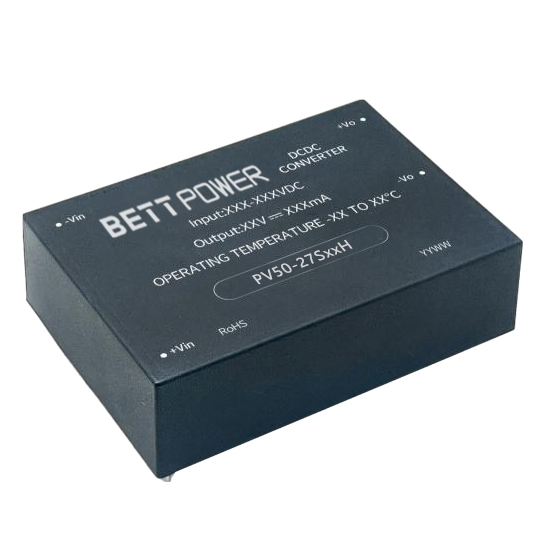
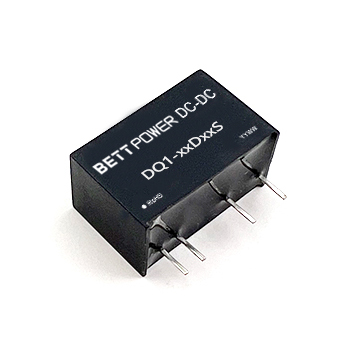

Three Key Factors in Selecting Industrial Module Power Supplies for Automotive and Charging Point Electronics
Date:2026-11-02 Publisher:BettpowerAs the penetration rate of new energy vehicles rises and the network of charging points becomes denser, the stable operation of core equipment—such as in-vehicle electronics and charging point control modules—directly determines travel safety and the charging experience. As the ‘heart and circulatory system’ of such equipment, the performance of industrial modular power supplies is crucial to the reliability and service life of the equipment. Given that vehicles and charging points are subjected to specific operating conditions—such as extreme temperatures, strong electromagnetic interference and high-voltage surges—the selection process must focus on three key factors to establish a robust ‘safety barrier for power supply’.

Key Point 1: Wide Temperature Range and Environmental Adaptability to Withstand Extreme Conditions
Environmental adaptability is the foundation for the long-term operation of modular power supplies. In automotive applications, these power supplies must withstand temperature fluctuations ranging from -40°C to over 60°C. Priority should be given to products with a wide temperature range covering -40°C to 105°C, which must also comply with the ISO 16750 vibration resistance standard to prevent poor contact whilst the vehicle is in motion.
As charging points are predominantly deployed outdoors, priority should be given to products with an IP54 protection rating or higher to prevent the ingress of dust and moisture. Additionally, surge protection designs compliant with the IEC 61643-11 standard should be incorporated to withstand thunderstorms and grid fluctuations, thereby reducing maintenance costs and ensuring a stable power supply to the equipment.

Key Point 2: High Safety Compliance + Comprehensive Protection, Safeguarding the Minimum Standards for Travel Safety
Safety and compliance are non-negotiable requirements. Power supplies for in-vehicle modules must be certified to the AEC-Q100 automotive standard, whilst high-voltage platform products must also comply with the ISO 26262 functional safety standard; power supplies for charging station modules must conform to the GB/T 18487.1 national standard and hold certifications such as CE and FCC to ensure compliance with electrical safety and electromagnetic compatibility requirements.
At the same time, they must be equipped with comprehensive safety protection functions: in vehicle applications, the focus is on overcurrent, overtemperature and overvoltage protection, as well as compatibility with the BMS (Battery Management System), to eliminate potential hazards such as battery fires and vehicle breakdowns; for charging points, protection against short circuits, earth faults and reverse polarity must be strengthened, ensuring an isolation voltage of ≥2,000 V to prevent electric shock and equipment damage.
Key Point 3: High Efficiency and Stability + Electrical Compatibility, Balancing User Experience and Energy Efficiency
High efficiency, stability and electrical compatibility must balance user experience with energy efficiency. In terms of electrical parameters, in-vehicle DC-DC modules must be compatible with 12V/24V DC buses, whilst charging station AC-DC modules must support a wide input voltage range of 85V–264V, whilst also incorporating a 10%–20% power margin to prevent damage from overloading.
In terms of efficiency, priority should be given to products with a conversion efficiency of ≥95 per cent; high-end products may achieve efficiencies of over 97 per cent, thereby reducing energy consumption and equipment temperature rise, extending service life and lowering operating costs. At the same time, output ripple must be controlled to ensure voltage stability, prevent interference with precision electronic components, and guarantee the smooth operation of charging and on-board equipment.

High-quality development in the new energy sector is inseparable from the support of core components, and the scientific selection of industrial module power supplies is of paramount importance. By focusing on three key aspects—adaptability to wide temperature ranges, high safety and compliance standards, and efficient electrical compatibility—precise selection not only avoids pitfalls and reduces operational and maintenance costs but also strengthens the safety barriers for new energy mobility, thereby supporting the industry’s efficient and energy-saving development.
Prev: Power Module Selection for Communication Systems
Next: No more.

Tel:020-32166196
Email:info@bettpower.com
Address:Building A1, No.1 Doutang Road, Huangpu District, Guangzhou City, Guangdong Province
- Product
- AC/DC Power Module
- DC/DC Power Module
- Support
- Application
- Sample Request
 WeChat
 Sample
 Tel
 Email
 TOP