
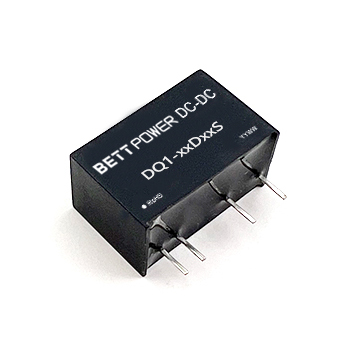

Linear and switching module power supplies: how should one choose between them for industrial control applications?
Date:2026-11-16 Publisher:BettpowerIn the research and development of industrial control equipment, power supply modules are the ‘heart’ that ensures system stability. With linear and switching modules being the two mainstream solutions, the key criterion for selection is not a matter of which is superior, but rather a match with on-site operating conditions, load characteristics and cost budgets; precise selection can prevent redundancy, waste and equipment failure.

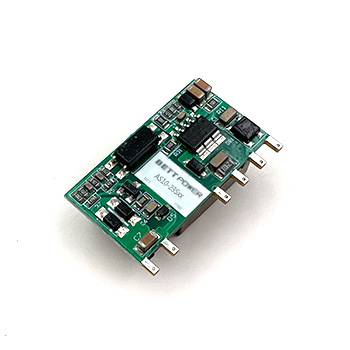
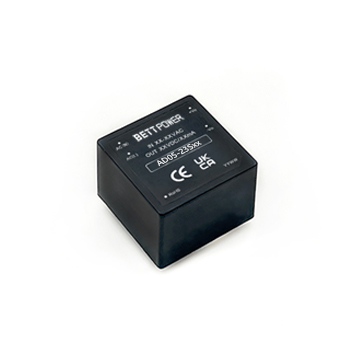
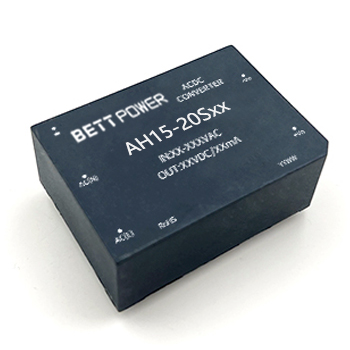
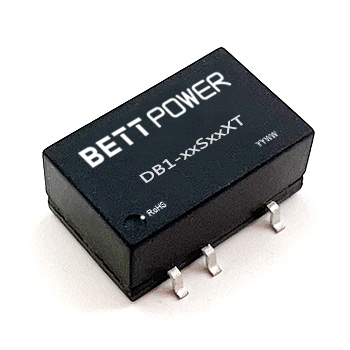
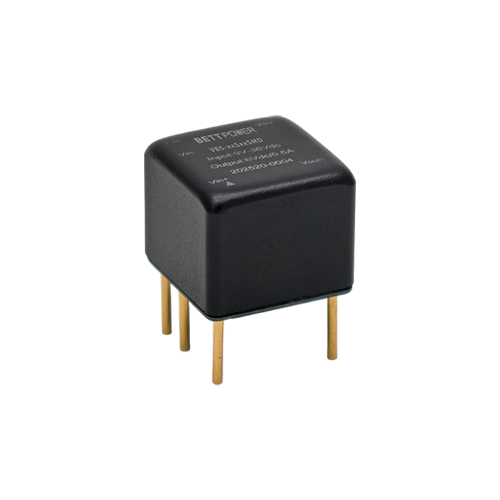
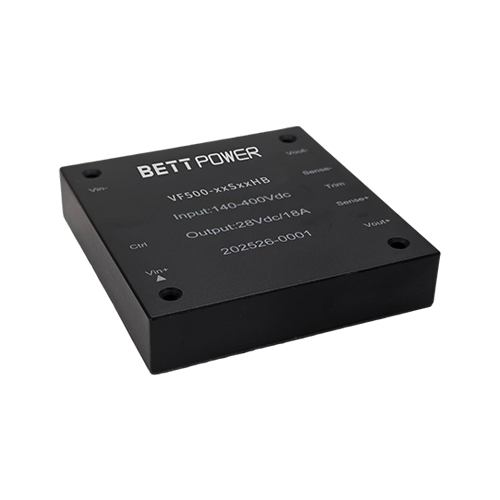
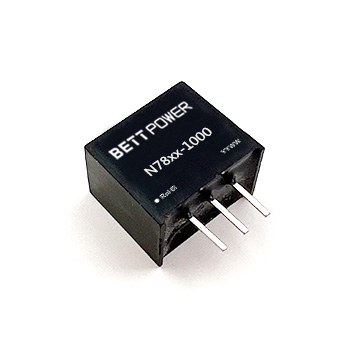
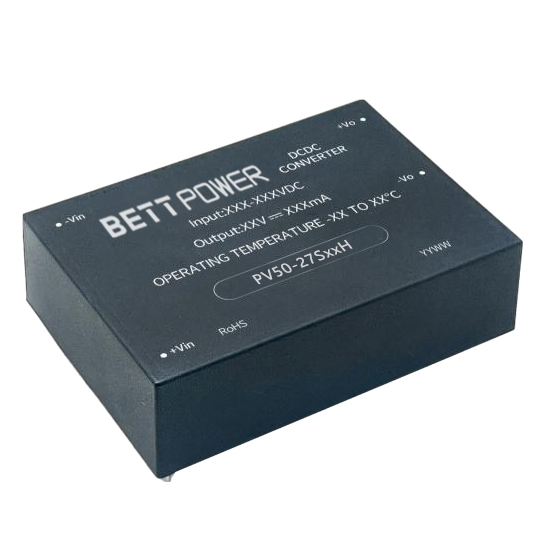
The core difference between the two stems from their operating principles: linear modules feature a simple structure, low output ripple (≤5 mV), low EMI and high voltage accuracy, making them suitable for scenarios where extremely high power supply purity is required; switch-mode modules offer high efficiency (85%–95%), a wide input voltage range (85–265 V AC), compact size and high power density, making them suitable for most industrial automation scenarios—particularly in environments with compact cabinets and frequent mains fluctuations—where only a certain degree of ripple interference is present.
Taking the example of an automotive welding workshop, the selection process can be clearly broken down as follows: In this workshop, the PLC and analogue sensors required precise acquisition of welding parameters. Initially, linear modules were selected to ensure accuracy; however, once commissioned, significant issues became apparent—conversion efficiency was only 60–70 per cent, excessive temperature rise required additional cooling, and they occupied valuable cabinet space. Furthermore, their resistance to grid harmonics was weak, leading to frequent under-voltage alarms, which resulted in PLC acquisition errors exceeding 10 per cent and adversely affected welding quality.

The R&D team optimised the selection by replacing them with industrial-grade switching modules and incorporating anti-interference design: an EMI filter circuit was added to the input, whilst the output was fitted with a suitable capacitor and an LDO regulator (reducing ripple to below 18 mV), and shielding and earthing were optimised. Following these optimisations, conversion efficiency was improved to 92 per cent, eliminating the need for additional cooling and saving 50 per cent of cabinet space; the wide-voltage capability eliminates under-voltage alarms, with measurement errors controlled to within ±0.5 per cent; built-in protection functions have reduced equipment failure rates to zero, significantly lowering operational and maintenance costs.
The key to selection lies in matching the application scenario: for high-precision analogue data acquisition and scenarios with stringent EMI requirements and low power consumption (such as precision instruments), linear modules should be prioritised; for conventional equipment such as PLCs and servo drives, particularly where cabinet space is limited, mains voltage fluctuations are significant, or high power is required (such as in smart warehousing and petrochemical production lines), switch-mode modules should be prioritised; when combined with anti-interference design, these can meet stability requirements.
Cost and O&M must be considered in tandem: linear modules are low-cost and easy to maintain, making them suitable for small-batch, low-power equipment; switch-mode modules have a slightly higher initial cost but are energy-efficient and support N+1 redundancy, making them suitable for large-scale, high-reliability projects (such as nuclear power and rail transport). When selecting modules, note that the ripple voltage of switch-mode modules must be ≤50 mV (in accordance with GB/T 17626), whilst for linear modules, attention must be paid to heat dissipation.

When selecting industrial control power supplies, there is no need to fall into the ‘either/or’ trap. By clearly defining core requirements based on on-site operating conditions, one can make a rational choice between linear and switching modules, thereby establishing a robust power supply defence to ensure the stable and efficient operation of equipment.

Tel:020-32166196
Email:info@bettpower.com
Address:Building A1, No.1 Doutang Road, Huangpu District, Guangzhou City, Guangdong Province
- Product
- AC/DC Power Module
- DC/DC Power Module
- Support
- Application
- Sample Request
 WeChat
 Sample
 Tel
 Email
 TOP