

Power Supply Design for Industrial Robot Controllers
Publisher:BettpowerHow AC/DC and DC/DC Power Modules Enable Reliable, Efficient and Scalable Robot Control Systems
Keywords: Industrial Robot, Robot Controller, AC/DC Power Module, DC/DC Converter, Industrial Automation, 24VDC Power Bus
Executive Summary
Industrial robots have become essential to modern manufacturing, enabling higher productivity, precision, and automation across industries such as automotive, electronics, logistics, and semiconductor production. At the heart of every robot is the controller, responsible for motion control, communication, safety monitoring, and system coordination.
While processors and servo drives often receive the most attention, the reliability of the entire controller depends on a well-designed power architecture. Stable power delivery ensures continuous operation, minimizes EMI, protects sensitive electronics, and improves long-term system reliability.
This application note introduces the typical power architecture of an industrial robot controller and explains how AC/DC power modules and isolated DC/DC converters work together to create a reliable and scalable power system.
1. Robot Controller Power Architecture
Modern robot controllers integrate multiple functional blocks, including processors, communication interfaces, safety circuits, sensors, and analog signal conditioning. Each block requires different voltage levels and electrical characteristics.
Instead of powering every circuit directly from the AC mains, industrial controllers typically use a distributed power architecture.
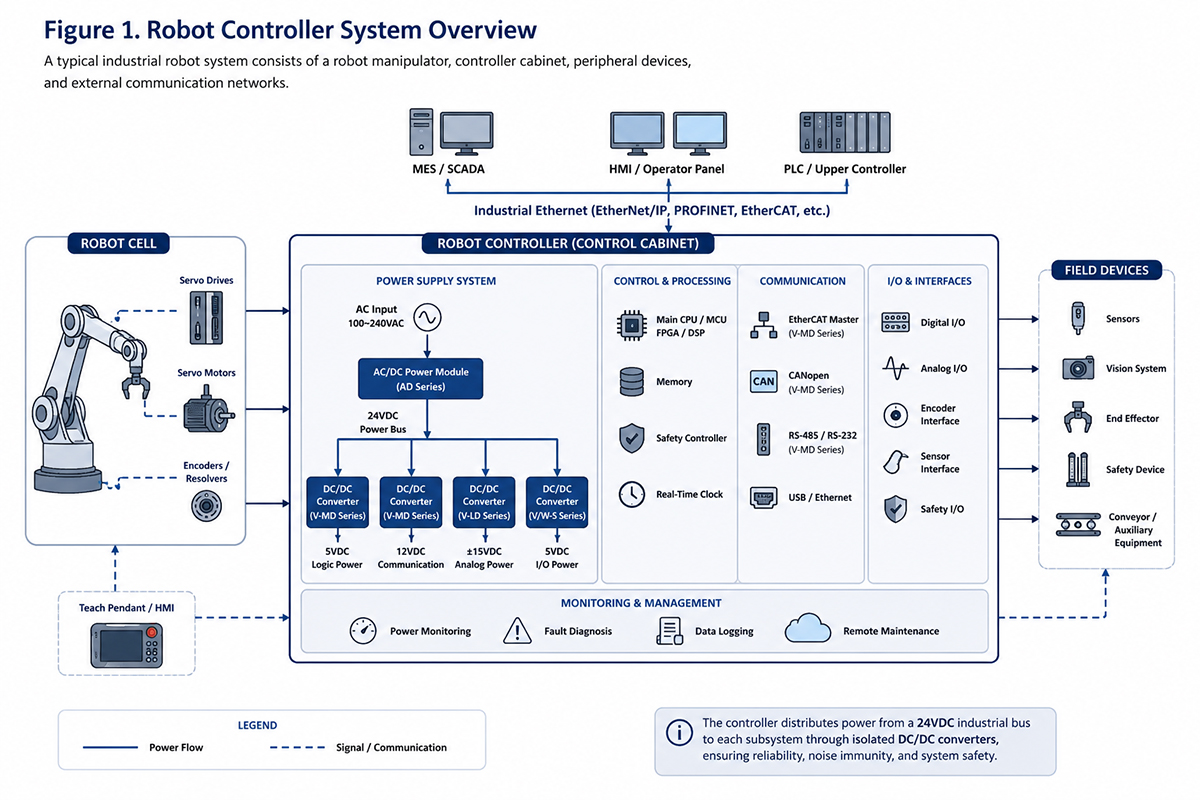
The AC input is first converted into a regulated 24VDC industrial power bus, which serves as the primary power source throughout the controller. Localized DC/DC converters then generate dedicated voltages such as 12V, 5V, 3.3V, or ±15V for specific subsystems.
This modular approach improves reliability, simplifies maintenance, and provides greater flexibility for future system expansion.
2. Why 24VDC Is the Industrial Standard
A 24VDC power bus has become the preferred standard in industrial automation because it offers an excellent balance between safety, efficiency, and compatibility.
Most industrial devices—including PLCs, HMIs, sensors, relays, safety controllers, and industrial communication modules—operate from 24VDC.
By distributing 24V throughout the control cabinet and converting it locally where needed, engineers can:
· Reduce wiring complexity
· Improve voltage stability
· Simplify troubleshooting
· Minimize transmission losses
· Support modular system expansion
3. Engineering Challenges
Designing the power system of a robot controller involves much more than selecting a power supply.
Engineers must address several challenges simultaneously:
Stable Power Under Dynamic Loads
Rapid acceleration, deceleration, and multi-axis motion create dynamic load conditions. The power system must maintain stable output during these transient events.
Electromagnetic Interference (EMI)
Servo drives and motor switching generate electrical noise that may affect processors, communication networks, and sensitive analog circuits.
Careful PCB layout, filtering, grounding, and low-EMI power modules help improve EMC performance.
Electrical Isolation
Communication interfaces, sensor inputs, and analog circuits often require galvanic isolation to reduce common-mode noise and improve system reliability.
Thermal Management
Robot controllers typically operate inside compact electrical cabinets. High-efficiency power modules reduce heat generation and contribute to longer component lifetime.
Long-Term Reliability
Industrial robots frequently operate 24 hours a day. Selecting industrial-grade power modules with high reliability and comprehensive protection functions is essential for minimizing downtime.
4. Engineering Selection Guide
When selecting power modules for an industrial robot controller, engineers should consider the complete system rather than individual voltage requirements.
The following checklist may be useful during the early design stage:
✓ Determine the total power required for the 24V industrial bus.
✓ Reserve approximately 20–30% power margin to accommodate transient loads and future expansion.
✓ Separate high-power motor circuits from sensitive control electronics.
✓ Use isolated DC/DC converters for communication interfaces and analog circuits whenever electrical noise immunity is important.
✓ Place DC/DC converters as close as possible to the load to minimize voltage drop and improve transient response.
✓ Verify thermal performance under the highest expected ambient temperature.
✓ Select products with appropriate safety approvals and isolation ratings for industrial automation applications.
By following these principles, engineers can create a scalable, reliable, and maintainable power architecture while reducing development risk and simplifying future system upgrades.
5. Reference Power Design Using BETTPOWER Modules
BETTPOWER recommends a modular power architecture that combines industrial AC/DC power modules with isolated DC/DC converters.
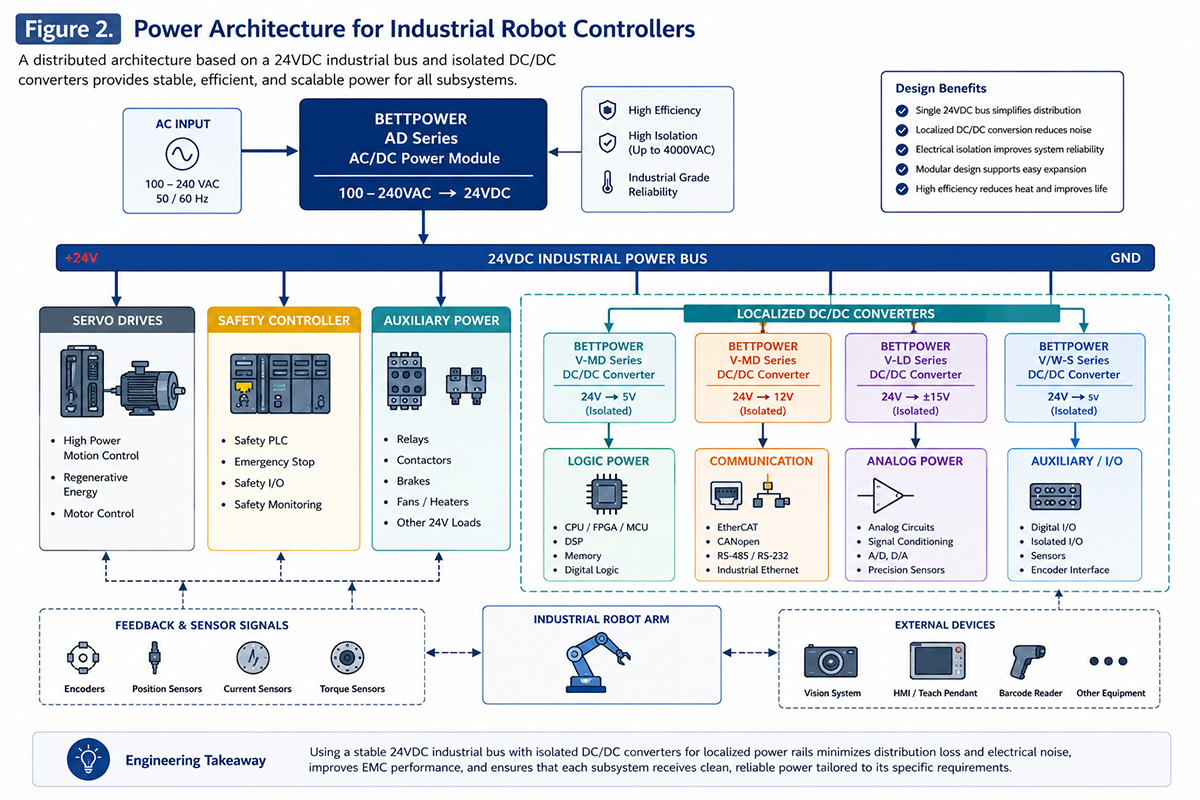
The AC/DC module generates a stable 24VDC industrial power bus, while isolated DC/DC converters create localized voltage rails for processors, communication interfaces, sensors, and analog circuits.
This layered architecture provides:
· Improved system reliability
· Better EMC performance
· Flexible voltage distribution
· Simplified maintenance
· Easy future expansion
6. Recommended BETTPOWER Product Families
Recommended BETTPOWER Product Families
The table below provides a reference for selecting BETTPOWER product families according to the functional requirements of a typical industrial robot controller.
Functional Block | Recommended BETTPOWER Series | Typical Output | Typical Application |
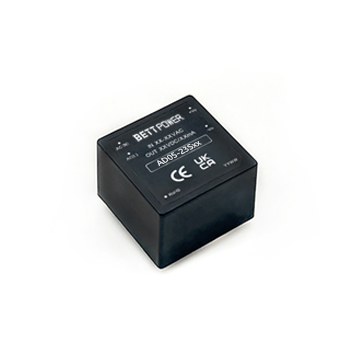
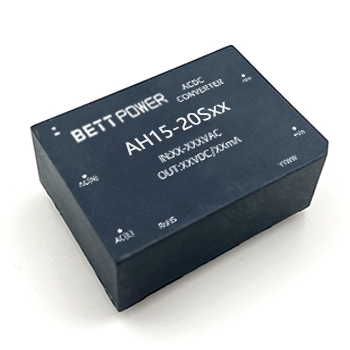
Primary AC Input | AD Series | 24VDC | Main industrial power bus |
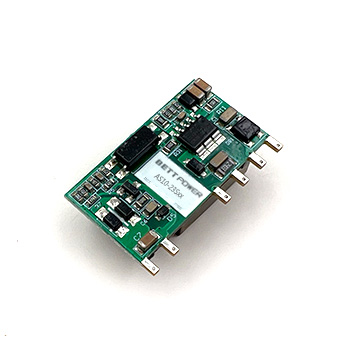
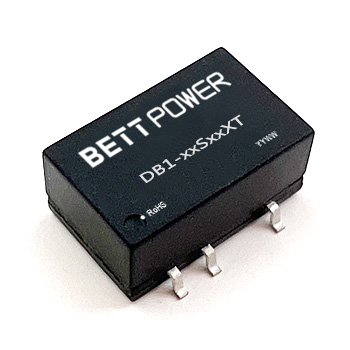
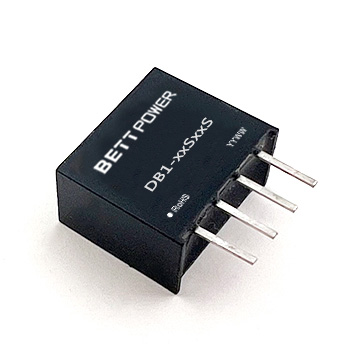
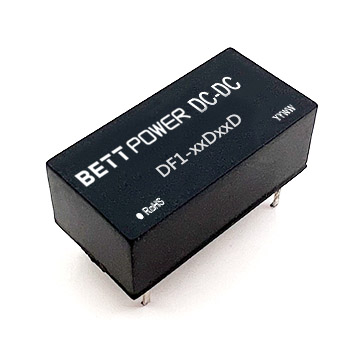
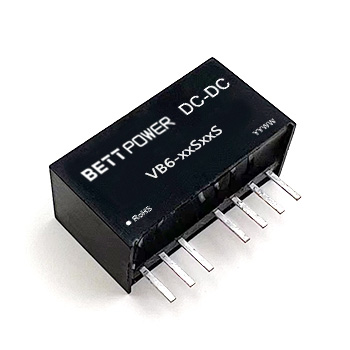
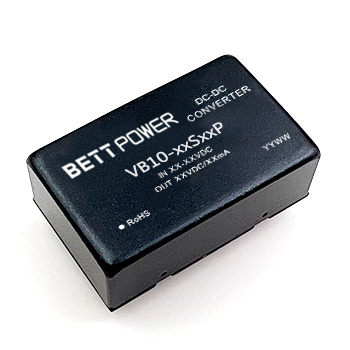
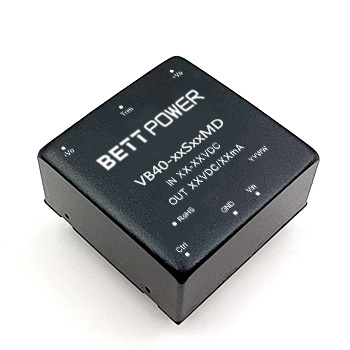
Logic Power | V-MD Series | 24V → 5V | ARM, MCU, FPGA |
Communication | V-MD Series | 24V → 12V | EtherCAT, CANopen, RS-485 |
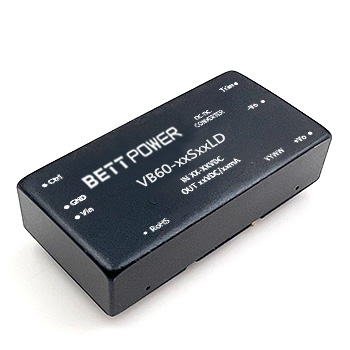
Analog Interface | V-LD Series | 24V → ±15V | Signal conditioning, measurement |
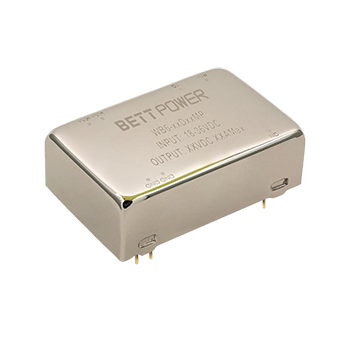
Digital I/O | V/W-S Series | 24V → 5V | Digital inputs and outputs |
The exact model can be selected according to the required output power, isolation level, package type, and installation constraints.
Why These Product Families?
The recommended BETTPOWER product families are selected not only for voltage conversion, but also for addressing the engineering challenges discussed earlier in this application note.
AD Series – Primary AC/DC Power Supply
The AD Series is well suited for generating the primary 24VDC industrial bus.
Typical advantages include:
· Wide AC input range suitable for global installations
· Stable 24VDC output for industrial control systems
· High isolation for improved safety
· Compact PCB-mount design
· High efficiency to reduce cabinet temperature
· Continuous operation in industrial environments
This series provides the stable power backbone upon which the entire robot controller depends.
V-MD Series – Logic and Communication Power
Digital processors and communication interfaces require tightly regulated low-voltage power with excellent stability.
The V-MD Series is suitable for powering:
· ARM processors
· FPGA platforms
· DSP controllers
· EtherCAT interfaces
· CANopen communication
· Industrial Ethernet modules
By generating isolated local voltages close to the load, the V-MD Series helps improve signal integrity while reducing PCB routing complexity.
V-LD Series – Analog Signal Conditioning
Precision analog circuits are particularly sensitive to electrical noise.
Typical applications include:
· Current sensing
· Position feedback
· Torque measurement
· Signal conditioning
· Operational amplifier circuits
The V-LD Series provides isolated output rails suitable for analog electronics, helping reduce common-mode noise and improve measurement accuracy.
V/W-S Series – Auxiliary Power
Many auxiliary circuits require compact and reliable isolated power sources.
Typical examples include:
· Digital I/O
· Sensor interfaces
· Relay drivers
· Auxiliary controllers
The compact package and flexible output options make the V/W-S Series suitable for distributed power applications throughout the controller.
7. Why Choose BETTPOWER?
BETTPOWER power modules are designed to meet the demanding requirements of industrial automation and robot control systems.
Key advantages include:
· Wide AC input range for global applications
· High isolation for improved electrical safety
· Compact PCB-mount design
· High conversion efficiency
· Low ripple and noise
· Industrial-grade reliability for continuous operation
Rather than supplying a single power source, BETTPOWER enables engineers to build a complete modular power architecture tailored to their application.
Conclusion
As industrial robots become increasingly intelligent and interconnected, power architecture plays a more important role than ever before.
A distributed power design based on a stable 24VDC bus, combined with isolated AC/DC and DC/DC power modules, improves system reliability, reduces EMI, simplifies maintenance, and supports future functional expansion.
BETTPOWER provides a comprehensive range of industrial AC/DC and DC/DC power modules that help engineers build reliable, efficient, and scalable robot controller power systems for next-generation industrial automation.
Industrial Automation:

Tel:020-32166196
Email:info@bettpower.com
Address:Building A1, No.1 Doutang Road, Huangpu District, Guangzhou City, Guangdong Province
- Product
- AC/DC Power Module
- DC/DC Power Module
- Support
- Application
- Sample Request
 WeChat
 Sample
 Tel
Tel
 Email
Email
 TOP
TOP